
There’s a pattern I’ve seen in manufacturing every time the economy tightens, and I’m seeing it again now. Nobody’s signing off on new capital equipment. The quotes go in, they get filed under “next year,” and the existing kit gets asked to do more.
That’s not a criticism — it’s the sensible thing to do. If you can’t justify a new cell, you sweat the ones you’ve already got. Longer shifts, tighter cycle times, less idle time between jobs. The machine that ran eight hours a day in 2019 is now running sixteen, and the maintenance window that used to sit comfortably in the gaps has quietly disappeared.
The problem is what that does to your risk.
Higher Utilisation Means Higher Stakes
When a machine runs at 40% utilisation, an unplanned stop is an inconvenience. You’ve got slack in the schedule, you catch up, nobody really notices. When the same machine runs at 90% utilisation, there is no slack. Every hour it’s down is an hour of output you can’t get back, because there’s no spare capacity to claw it back with.
So the irony is that the harder you run your existing machines, the more each individual stoppage costs you — and the less margin for error you have. You’ve taken away the buffer that used to absorb problems, and you’ve done it precisely because money is tight and every part counts.
That’s exactly the situation where visibility stops being a nice-to-have and starts being the thing that protects your throughput.
You Can’t Improve What You Can’t See
Most factories running hard have surprisingly little real data on how their machines are actually performing. They know the line’s busy. They know roughly what came off the end of it. But ask how many times cell 3 went into a minor stop last week, or what the real cycle time is once you account for the small interruptions nobody logs, and there’s usually a shrug.
Those small, unrecorded losses are where the capacity hides. A machine that’s “running fine” but drops thirty seconds here and a two-minute reset there, twenty times a shift, is quietly giving back a chunk of the extra output you’re relying on. You can’t fix it because you can’t see it.
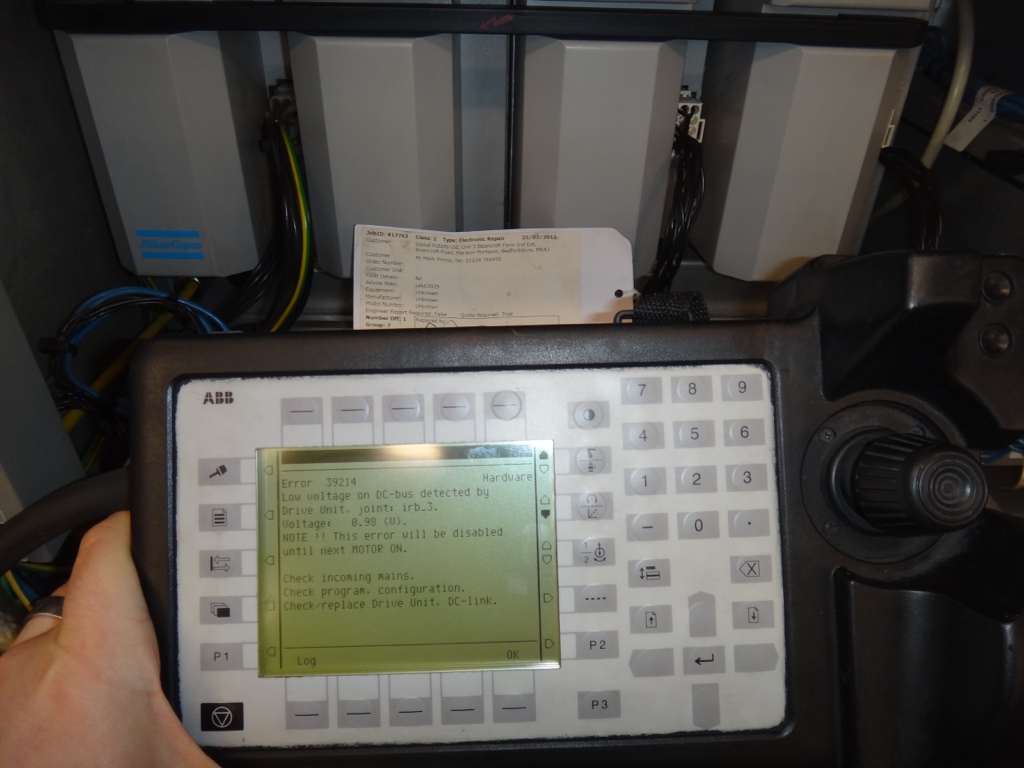
RoboVigil pulls the data straight off the machine — cycle counts, states, stoppages, fault codes — and puts it on a timeline you can actually read. Not a SCADA screen you have to be sat in front of. Your phone. You see what’s running, what’s stopped, and how often, wherever you are. It connects to most machines over OPC-UA, and to robots like ABB and FANUC, or process machines like injection moulders, with no change to how they run.
What This Looks Like in Practice
You’re getting maximum output from equipment you already own. RoboVigil shows you:
- Live status of every monitored machine, on your phone, in real time. No walking the floor to find out what’s down.
- Push alerts the moment a machine stops or faults — so the gap between “it stopped” and “someone noticed” is seconds, not the rest of the shift.
- A camera snapshot taken at the moment of the fault, so you can often see what happened before you’ve even got to the machine.
- Historical data that turns “it feels like that cell stops a lot” into an actual number you can act on.
None of that requires new machines. None of it requires ripping anything out. It uses off-the-shelf IP cameras and your existing network over a secure WireGuard connection — there’s nothing of ours on the floor and nothing to install.
The Economics
At £150 per machine per month, the maths is straightforward. If you’re running a machine hard because you can’t justify replacing it, the last thing you can afford is for it to stop for half a shift before anyone notices. One avoided stoppage of a few hours typically covers the monitoring for months. If you want that spelled out, we’ve done it in RoboVigil vs Doing Nothing.
When you can’t buy your way out of a capacity problem, the only lever left is getting more out of what you’ve got — running it harder, and running it smarter. RoboVigil is the “smarter” half of that equation.
Running your machines harder usually goes hand in hand with keeping them longer. We’ve covered that side of it separately in Older Machines Don’t Fail Less — They Fail More.
Try it on your own machines — sign up at robovigil.com, use it free for a month, and connect your first machine in under an hour.