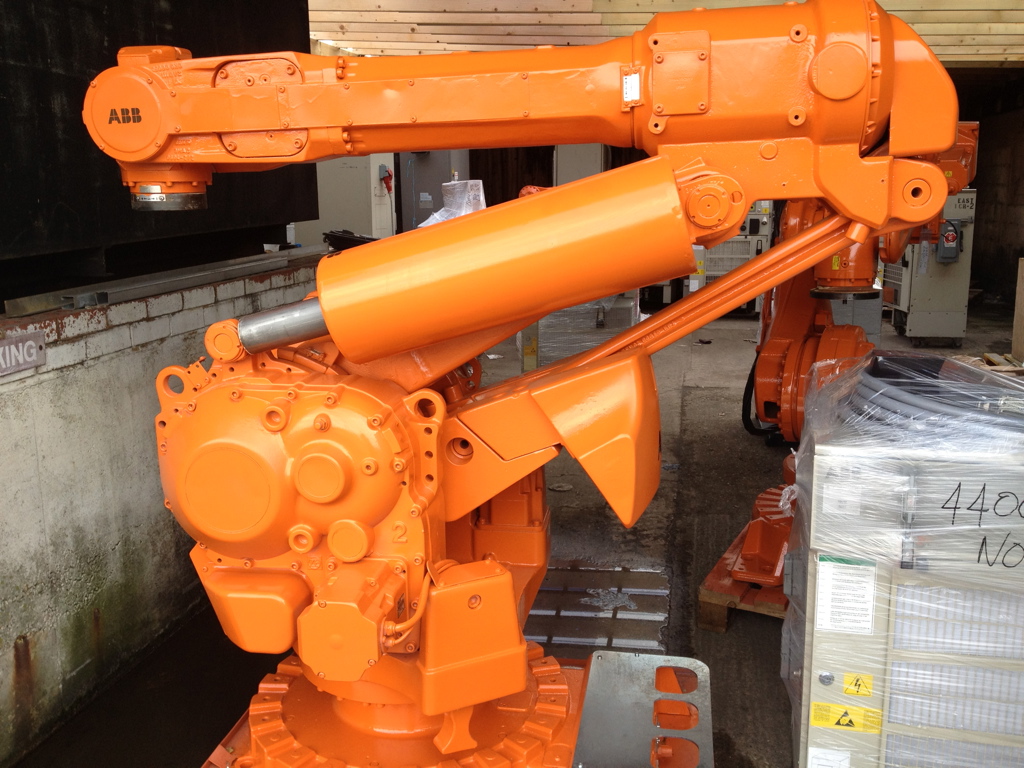

Every machine has a reliability curve, and it’s not flat. Equipment is at its most reliable somewhere in the middle of its life — past the early teething problems, before the wear sets in. After that, things start to drift. Bearings get sloppy, sensors get noisy, connections get intermittent, and the little faults that used to never happen start happening.
That’s just physics. Nothing runs forever, and nothing gets more reliable with age.
Here’s the thing, though: in a tight market, the machines you’d normally have replaced by now are the ones you’re keeping. The capital budget that would have funded the new line has been deferred, so the fifteen-year-old machine that was due for retirement is still in production — and it’s heading into the part of its life where it needs watching most, at exactly the moment you’ve decided not to replace it.
Old Machines Fail Differently
A new machine tends to fail cleanly. It works, then it stops, and the fault code tells you why. An old machine is messier. It fails gradually and intermittently. The fault that trips once a week, then twice, then every shift. The cycle time that’s crept up by 10% over a year and nobody clocked it. The sensor that’s right 95% of the time, which is somehow worse than one that’s always wrong.
These are the failures that cost the most, because they’re hard to catch and easy to live with — right up until the machine stops dead in the middle of a job and you’re scrambling for a part that’s now obsolete.
The defence against that isn’t a younger machine you can’t afford. It’s seeing the drift before it becomes a breakdown.
No Two Machines Are the Same
Industrial machines are typically very reliable — I’ve seen robots with over 100,000 hours still working well. But machines vary wildly depending on their application, environment, loading, service record, and many specific details. A robot that’s held in a difficult position or makes an awkward movement can strain gearboxes, brakes and internal cables in a way that the one next to it may not, even when they both have identical apparent histories and service records.
That makes it difficult to impossible to know how hard you can push a machine without data — whether you’re hoping it’ll last another five years, or whether it can be pushed for another 20% performance. RoboVigil is designed for exactly this. Variation is a fact of life, and you need a system that can cope with it: one that’s looking for faults, spotting failures early, and telling everyone who needs to know what the issues are and have been with a machine.
That context is the part people miss. Everyone on the system can see that robot A has had ten faults this month and something is seriously wrong — rather than four different techs each thinking two or three faults in a month is nothing to worry about.
Early Warning Is the Whole Game
If you can see that cell 4 has gone from two minor stops a shift to nine over the past month, you’ve got a problem you can plan around. You can schedule the fix for a quiet window, order the part before it’s an emergency, and avoid the unplanned stop that takes out a whole shift. If you can’t see it, the first you know about it is when the machine’s already down and the line behind it is backing up.
That’s the difference between maintenance you control and maintenance that controls you. Old equipment makes that gap wider, because there’s more drift to catch and less margin when you miss it.
RoboVigil watches the machine for you. It pulls the data straight off the controller, tracks how it changes over time, and tells you when something’s heading the wrong way — before it’s a callout.
What You Actually Get
For ageing equipment, the value is in spotting the slow decline and reacting fast when something does let go:
- Trend data over time — so a gradual rise in stoppages or creep in cycle time shows up as a line on a chart, not a nasty surprise.
- Push alerts the moment something faults, day or night, manned or unmanned — the older the machine, the more this matters.
- A camera snapshot at the moment of the fault, which on an old machine that throws a vague or unhelpful error code is often worth more than the code itself.
- A full fault history in chronological order, so you can look back and see whether this is the first time or the fifth, and whether it’s getting worse.
It works across the machines you’ve already got — modern OPC-UA equipment connects directly, and older controllers connect through an inexpensive gateway. Whether that’s an ABB IRC5, a FANUC, or an injection moulding machine, the principle is the same. It uses off-the-shelf IP cameras and your existing network over WireGuard. Nothing of ours sits on the floor, and there’s nothing to install.
Keep the Machine. Just Don’t Run It Blind.
There’s nothing wrong with keeping an old machine in production. Plenty of fifteen- and twenty-year-old equipment still earns its keep, and replacing perfectly serviceable kit just because it’s old is its own kind of waste. The mistake is keeping it and having no idea how it’s really doing until it fails — especially if you’re also running it harder than you used to.
At £150 per machine per month, RoboVigil is a fraction of the cost of the breakdown it helps you avoid — and a tiny fraction of the new machine you’ve decided you don’t need yet. If you’re going to keep your old equipment running, give yourself the visibility to keep it running well. (If you’re weighing it up, we’ve laid out the case in RoboVigil vs Doing Nothing.)
Try it on your own machines — sign up at robovigil.com, use it free for a month, and connect your first machine in under an hour.